As I pointed out in Part 1 of this series (Art as a Universal Language, Part 1: Why Understanding Visual Art is Essential), engaging with visual art of different cultures helps us understand our similarities as a human race. It helps us develop empathy, and thereby hopefully contributes to a more peaceful global society.
In this, Part 2, I’d like to explore how certain contemporary artists use visual imagery to reveal historical realities. One of the most acclaimed contemporary artists working today is Chinese American artist Hung Liu. I have represented Hung Liu for more than a decade, and she continues to be one of the most inspirational artists I have ever known. She grew up in China under Mao, during the Cultural Revolution. Her father, an intellectual, had been sent to a labor camp, and Hung only saw him again shortly before he died. Hung was sent to the countryside to work in the fields with Chinese peasants for four years, as part of the “re-education” system in China. For a fantastic description of Hung Liu’s life in art, go to this link: Smithsonian Journal of American Art article on Hung Liu.
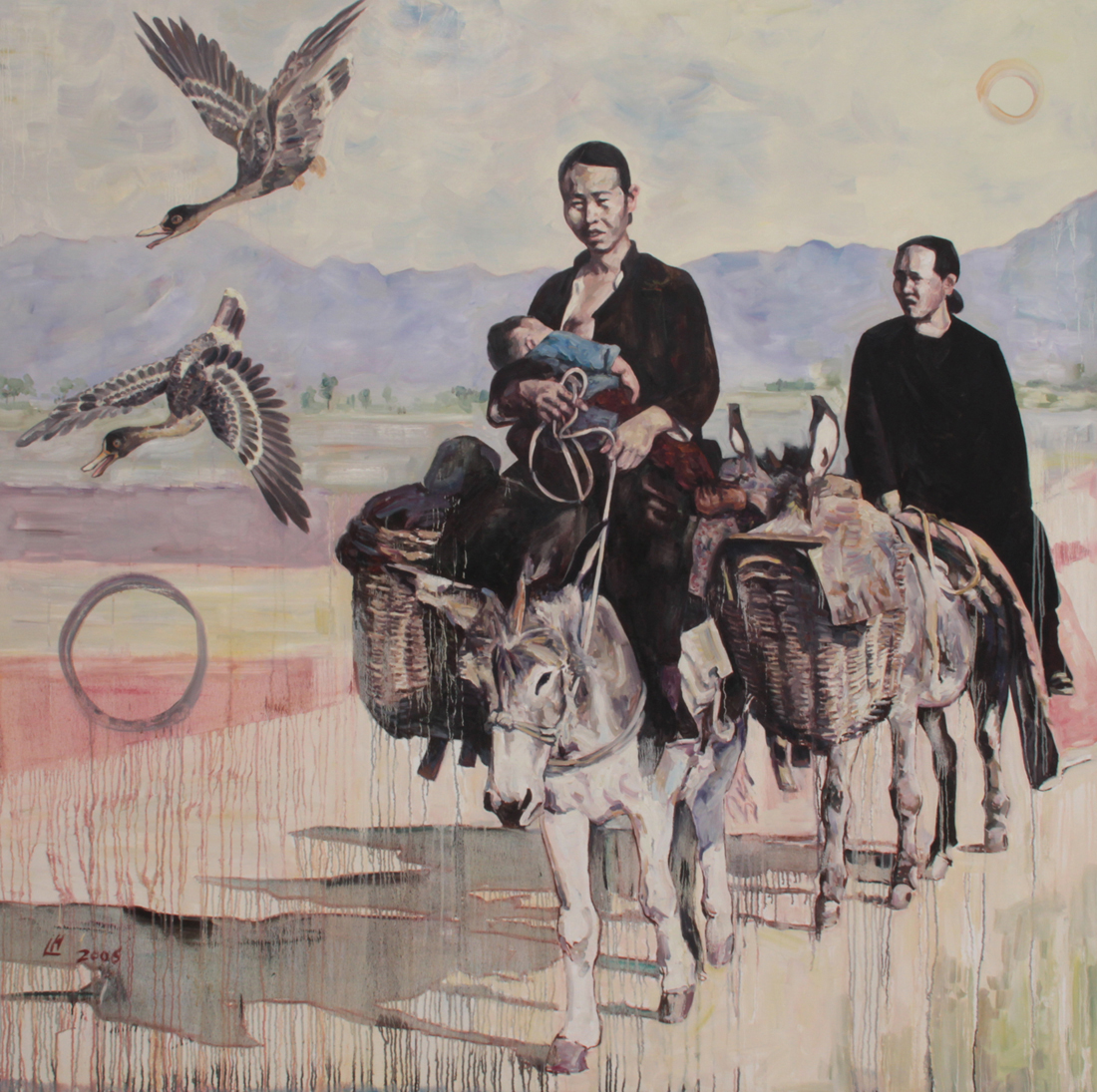 |
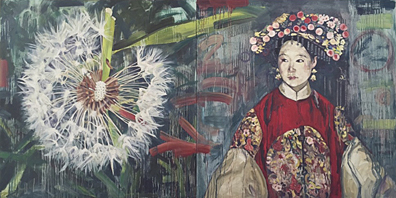
| Hung Liu, Western Wind oil on linen, 80 x 80" Turner Carroll Gallery
Hung’s story is rich and complex, and she dedicates her life to giving the downtrodden people she worked with a life of beauty in her paintings. She paints from historical photographs, because for Hung, “Every day is Memorial Day, and every day is Thanksgiving.” She is grateful that she escaped the turmoil of Maoist China, but she simultaneously immortalizes those who did not, so we will never forget that their struggle. In “Western Wind,” Hung paints a difficult journey in a manner of grace and beauty. The drips represent the blurring of memory.
|
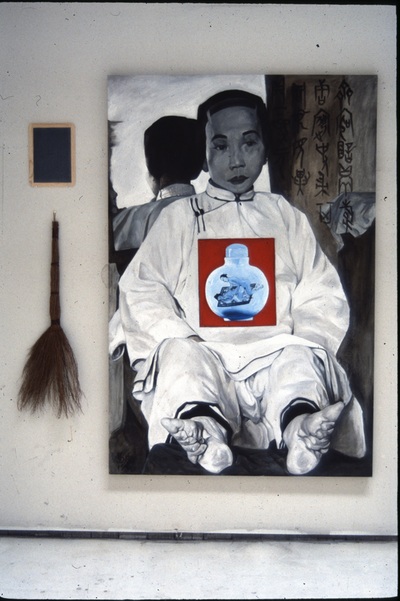 |
Hung Liu, “Goddess of Love, Goddess of Liberty”
mixed media, 1989
Permanent Collection, Dallas Museum of Art
|
In her painting “Goddess of Love, Goddess of Liberty,” Hung references the historic treatment of women in China. She reminds us of the atrocious practice of binding their feet. Hung was inspired to create this painting after seeing a photograph of a woman who had removed her bandages to show her tiny, 3 inch feet, permanently mangled by being bound. Hung shows us that unlike European images of female power and strength, in China, women were as subservient and “invisible” as the blank blackboard hanging next to the painting. The broom in this work references the brooms women used to sweep up the blood after the Tiananmen Square massacre.
 |
Even when it isn’t immediately apparent, there is always a strong historical reference in every painting Hung Liu creates. She feels a sense of urgency to document historically altering events. “September”, though an exquisitely gorgeous image, was created to memorialize the tragic events at the 9/11 World Trade Center. Hung uses a Song dynasty bird in this image, emerging through the body of a beautiful Chinese bride, to represent the planes and the towers. She uses her images to recount monumental historic events, but she can’t help but to “heal” the event by making her images beautiful. In doing so, she actively participates in our understanding of history. She says:
History to me is not a noun. It’s a verb. History is constantly changing… You can rewrite history; history was written by the winners. In China, specifically I remember during the Cultural Revolution, one high-ranking comrade was somehow ousted as the public enemy. Way before PhotoShop or the digital age, there were images that were erased from historical photographs. When you saw that, you were shocked at first. How could you change history? He was there, he was with you, but they erased him completely. In China, we always had great slogans: “Serve the people heart and soul.” But who are those people when it comes down to it? Who are the heroes? I learned that history is a verb, and when you have new discoveries in terms of evidence, materials, and witnesses, new kind of recall, or maybe a regime change, history can be rewritten. So that [realization] really liberated me.
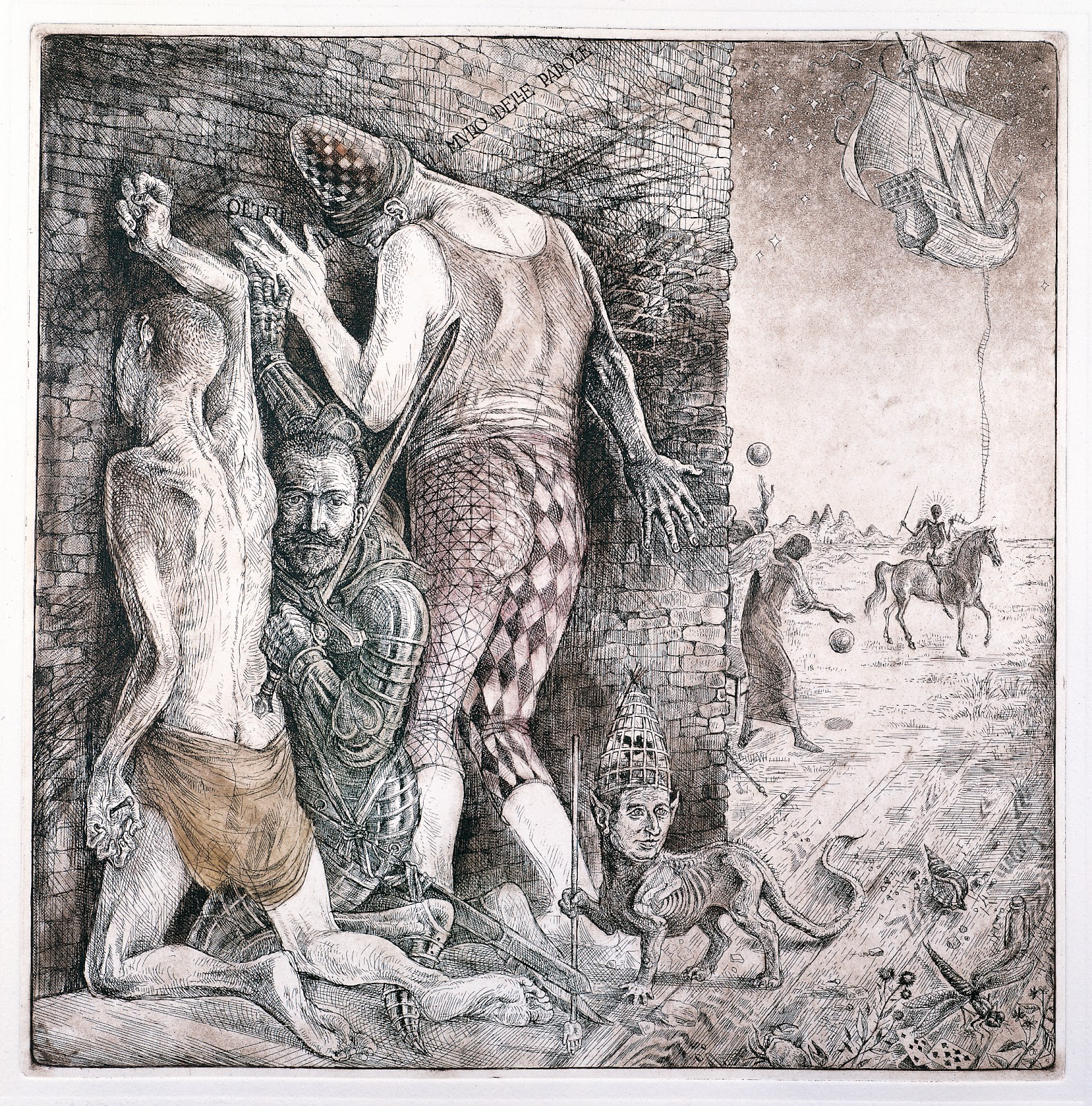
“The Wall” (“Oltro il mure delle parole”)
intaglio etching, a la poupee
ap/30, 29.75 x 22”
Turner Carroll Gallery
Some artists use iconography from the history of art, as Visual Code. Traian Filip, Head of Romanian State Engraving Studios under dictator Nicolae Ceausescu, used symbolism to relay the suffering of Romanians under Ceausescu, and ultimately to orchestrate his own escape. “Oltri il muro delle parole” (After the wall of the words), portrays Traian’s assessment of life in Romania during Ceausescu’s Communist regime. He places the dictator’s head on the body of a starved dog (Romania), with a birdcage on his head, symbolizing that “his thoughts were bought.” A self portrait of the artist with a sword, caught between the oppressive dictator’s “wall of words” and the sword, shows how trapped he felt. In the background, an angel juggles and the floating ship represents a hope for escape. There are many more examples of symbolic cries for help in this etching. When it was shown in Italy, it was purchased by the Vatican Museum. Romanian story of oppression.
Traian exhibited imagery such as this, throughout the world, to tell the Romanian story of oppression. He could not attend these exhibitions himself, but his images told the secrets of the repressive Ceausescu regime. When Filip’s etchings were exhibited in Sweden, the Swedish government understood his visual messages and initially helped him escape. Filip’s highly symbolic images are now found in museums throughout the world. I wrote (with Michael Carroll) a book about Traian, titled Traiain Alexandru Filip: His Art and Life.
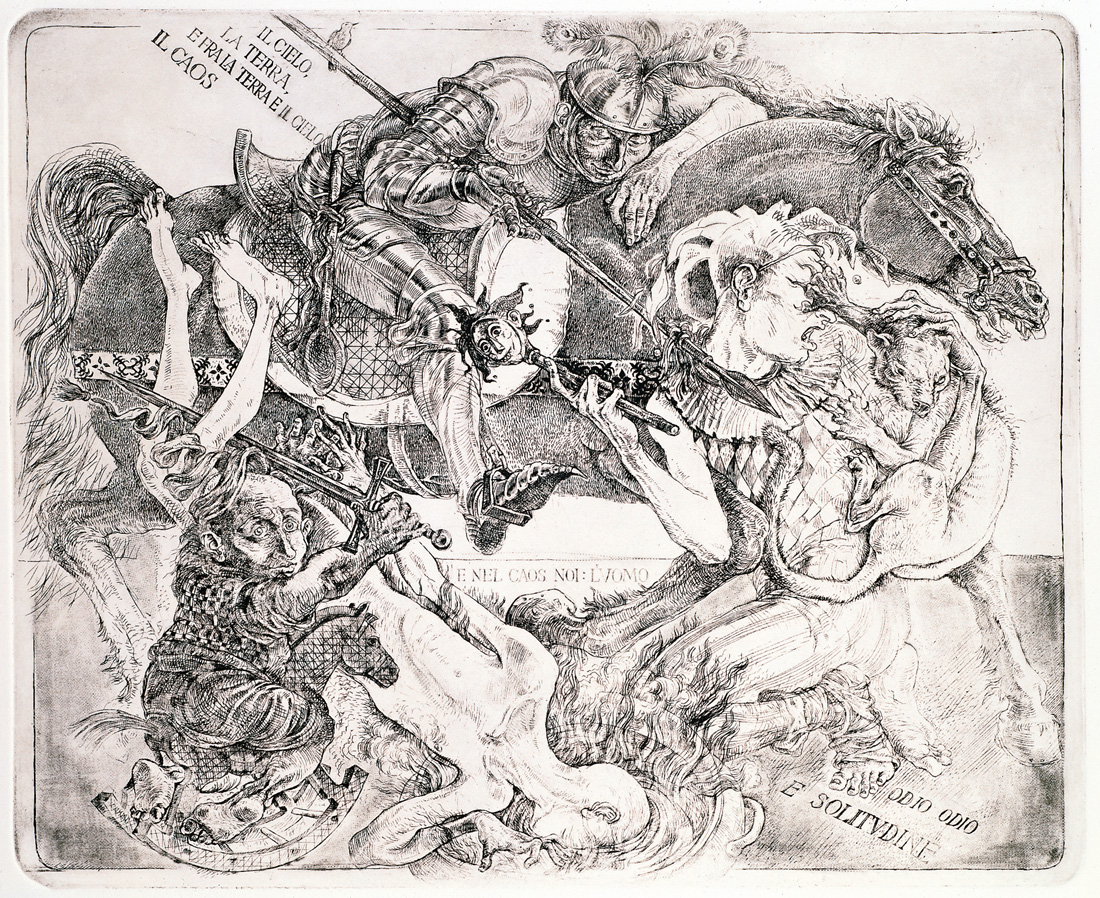 |
Traian Filip, Il Chaos
a la poupee intaglio etching
Turner Carroll Gallery
|
Traian writes an Italian inscription in this work, that translates as “The sky, the earth, and between the earth and the sky--chaos.” He places the likeness of the Romanian dictator on the body of a child riding a rocking horse and donning a dunce cap. Meanwhile, a wicked-looking cat claws off the face of the harlequin, aka the fool, or every-man, in traditional iconography. Traian speaks volumes about the ridiculous political situation in Romania, with this etching.
Traiain Filip
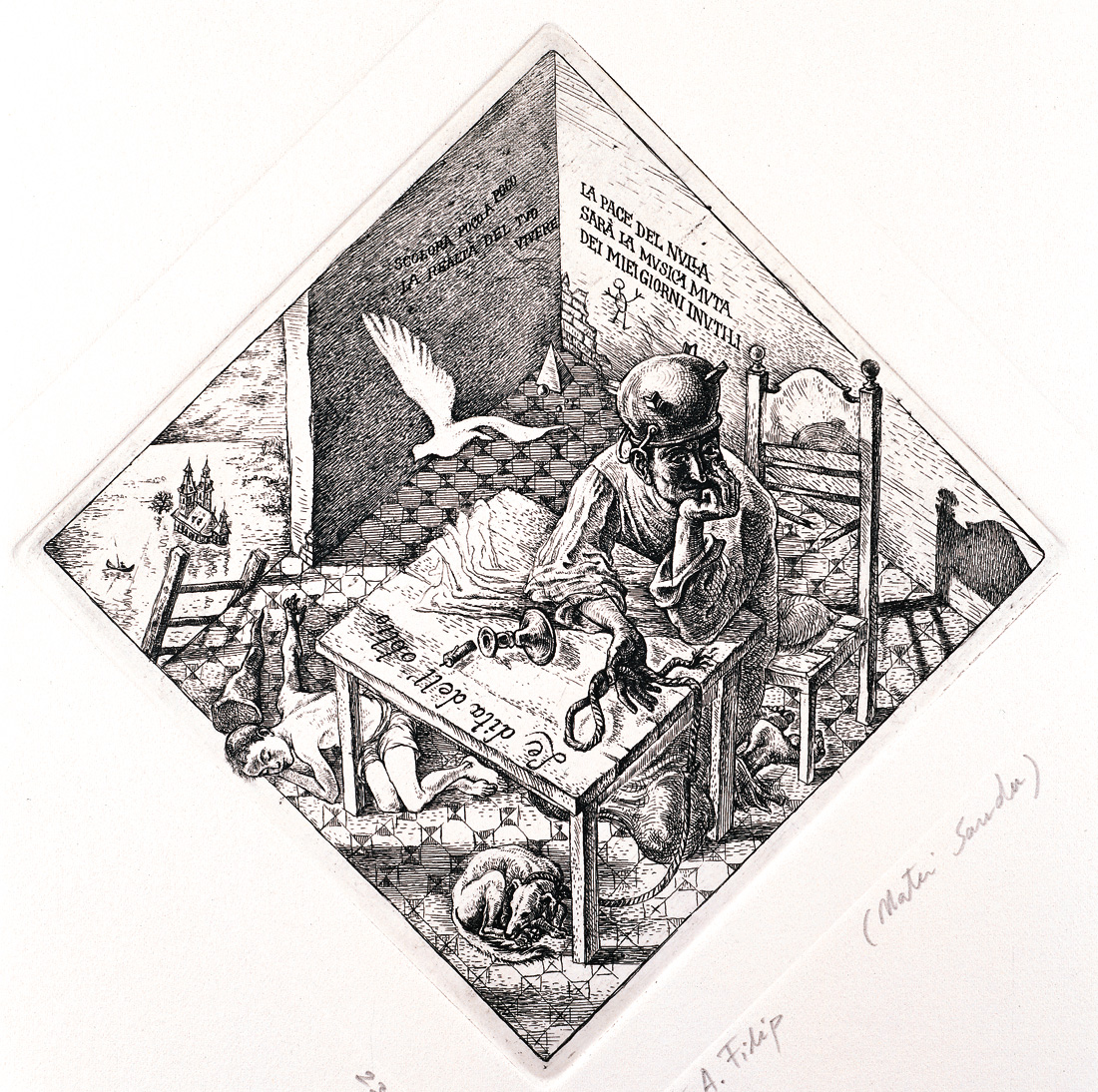
"La Pace del Nulla" ("The Peace of Nothing")
a la poupee intaglio etching
1985
19.5 x 19.4”
Turner Carroll Gallery
This etching is titled “The Peace of Nothing.” Traian shows the desperation of the times, with hungry child and dog lying on the floor beneath the empty table. The bird, as if the soul, has already flown away, and the city of Bucharest is swallowed by a deluge in the background.
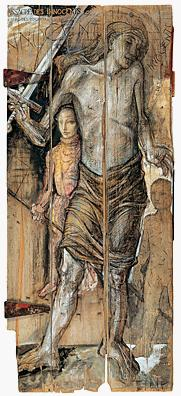
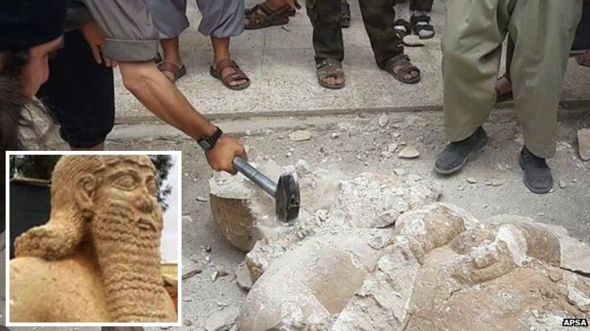
“Massacre of the Innocents” takes on an even more grim meaning today, considering the recent barbarism of ISIS. For Traian, this painting was his quintessential statement of the historical trauma the Ceausescu regime inflicted upon Romania’s innocents. He painted the painting not on a traditional surface, but on an old door. He did this to show his willingness to sacrifice everything--including warmth and shelter--to express the desperation of Romanians.
 |
|
2013, wood, paint
Turner Carroll Gallery
|
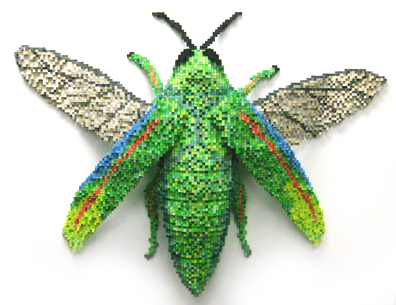
Alan Rath and Shawn Smith document our contemporary history in the U.S., by creating objects that portray our immersion in digital culture. Americans spend massive amounts of time (up to 11 hours per day, according to a recent Nielsen report), “watching” electronic screens. Televisions, computers, smart-phones, game consoles--these devices have become our primary mode of communication with the outside world. Shawn Smith spent his urban, 1980s, childhood, playing video games. The pixelated Atari game was his window into the natural world. Describing his gaming life in an interview in Wired magazine, “I’d never been camping, so I thought that’s what it was: wrestling crocodiles living in pixelated lakes, jumping over scorpions,” Smith says. “The whole idea was to avoid nature and win some gold coins.”
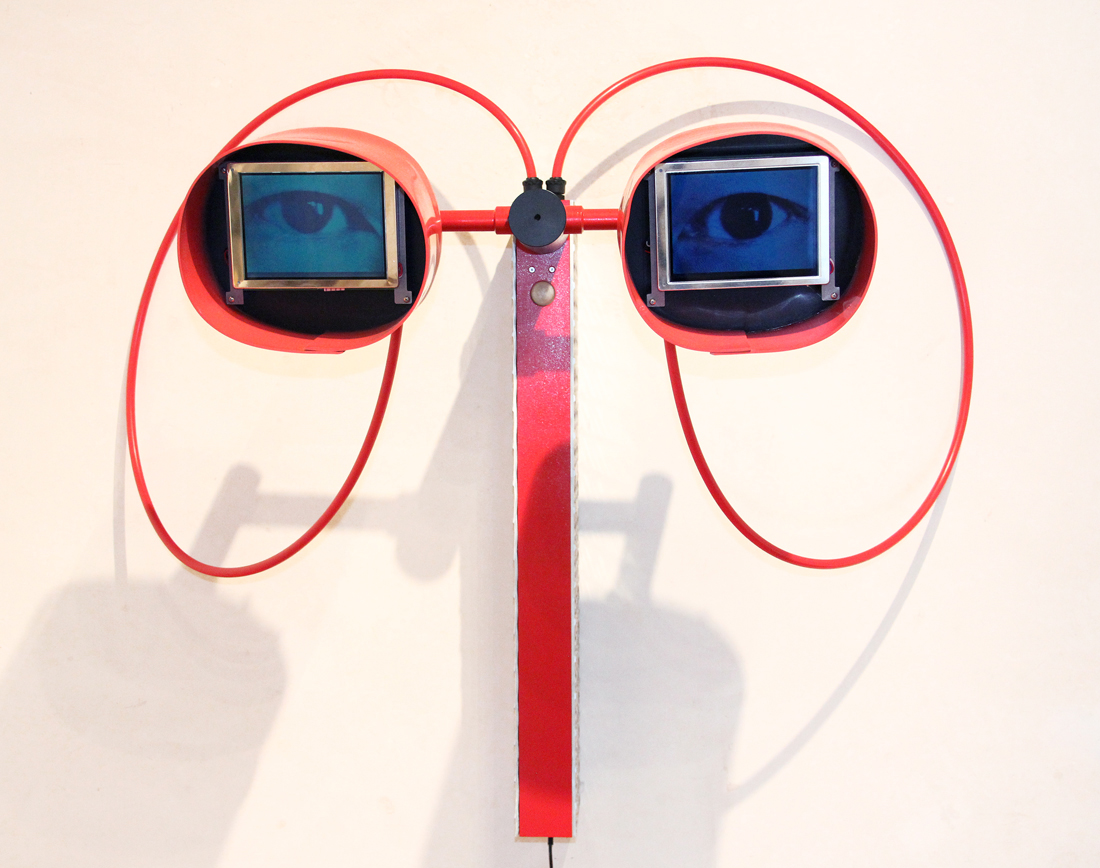 |
| Alan Rath “Neo-Watcher IV” 2001, mixed media sculpture with video Turner Carroll Gallery |
Trained as an engineer at M.I.T., Alan Rath embodies the new artist/scientist meme. His digital, robot-like sculptures “watch us back,” as we watch them. To incorporate how the concept of singularity is ever present in our contemporary society, Rath’s sculptures do not repeat themselves; they evolve and change as they progress.
From documentarian to commentator, the artist depicts history in a visual language all people can understand, regardless of the language they speak. In so doing, the artist creates a transparent global society, and reveals integral realities that might otherwise go unseen.
From documentarian to commentator, the artist depicts history in a visual language all people can understand, regardless of the language they speak. In so doing, the artist creates a transparent global society, and reveals integral realities that might otherwise go unseen.
End, Part 2
725 Canyon Road
Santa Fe, New Mexico 87501
United States of America
turnercarroll.com